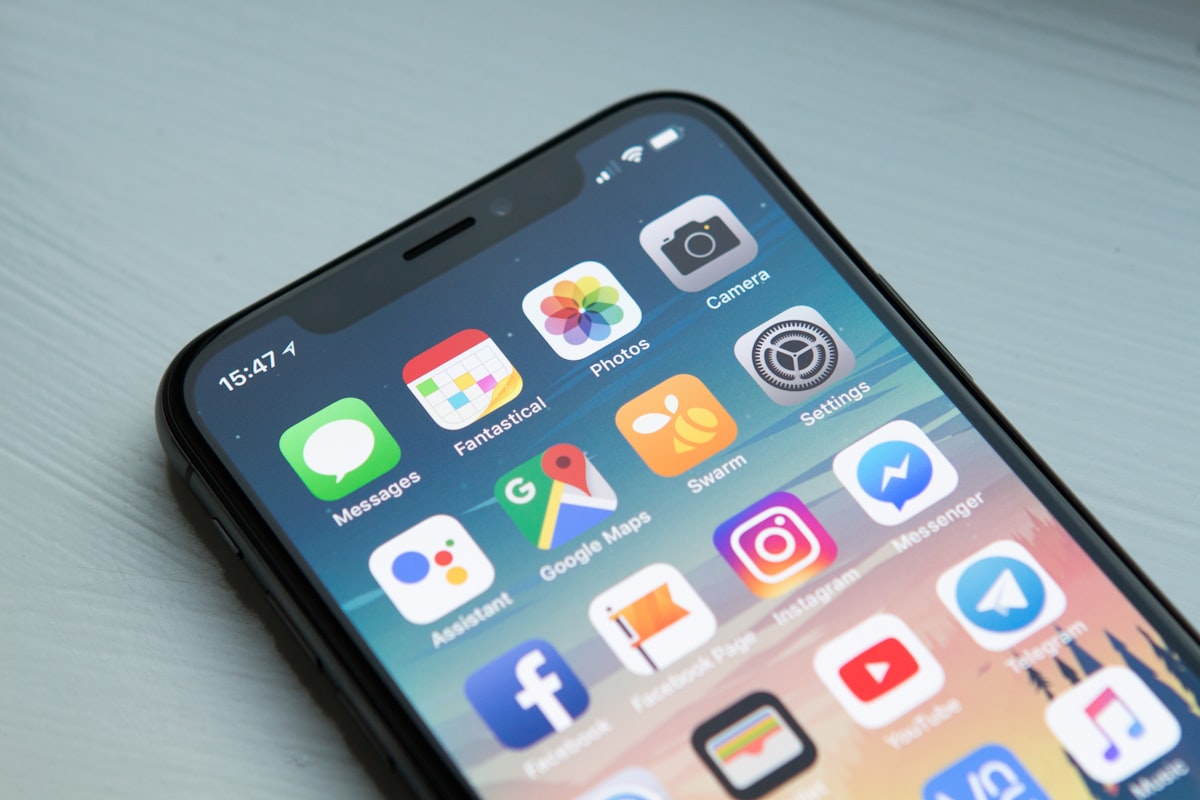
Dubai is one of the world's most iPhone-dense markets. Walk into any boardroom in DIFC, any luxury retail outlet on Sheikh Zayed Road, or any real estate developer's sales office - iPhones dominate. That single demographic reality reshapes every mobile investment decision for UAE businesses.
Why the UAE Is an iOS-First Market
Globally, Android commands roughly 72% market share. The UAE flips this equation. Statista and multiple regional surveys consistently place iOS penetration in the Emirates above 40% overall - and significantly higher among the professional, high-net-worth demographic that drives discretionary spending in sectors like luxury goods, real estate, financial services, and hospitality.
The reason is straightforward: the UAE has one of the highest GDP-per-capita figures in the world, and a large share of residents are high-income expatriate professionals. This group overwhelmingly chooses Apple. For any business whose primary customer is a Dubai professional or a GCC high-net-worth individual, reaching iOS users first is not a preference - it is a revenue strategy.
Higher Average Order Value from iOS Users
Across e-commerce, financial apps, and on-demand platforms, iOS users consistently spend more per transaction than Android users. Industry benchmarks from AppsFlyer and Adjust regularly show iOS in-app purchase rates running 2-3x higher than Android equivalents. For a Dubai-based luxury retailer, property portal, or fintech startup, this differential is material.
Apple Pay is now deeply embedded in UAE consumer behavior. Major UAE banks - Emirates NBD, ADCB, FAB, and Mashreq - support Apple Pay natively. Enabling one-tap Apple Pay checkout inside your iOS app removes the single biggest friction point in mobile commerce: payment entry. Businesses that have integrated Apple Pay report measurable lifts in conversion rates at checkout.
App Store Quality Standards Build Brand Trust
Apple's review process is rigorous by design. Every app submitted to the App Store is manually reviewed against strict guidelines covering privacy, security, performance, and UI standards. For UAE businesses operating in regulated industries - investment platforms, insurance apps, telemedicine, or property transaction tools - this review layer provides a credibility signal that customers recognise.
When a Dubai real estate investor or a DIFC-registered wealth manager downloads your app from the App Store, they carry an implicit assumption: Apple checked this. That trust transfer is real. It reduces the skepticism barrier, especially for financial apps handling sensitive data or large transactions.
Superior Security and Privacy Architecture
Apple's closed ecosystem model is a genuine security advantage, not just a marketing position. iOS benefits from hardware-level encryption via the Secure Enclave, strict sandboxing between apps, mandatory App Transport Security (HTTPS enforcement), and Face ID / Touch ID biometric authentication built into the OS.
For a Dubai business building a banking app, an employee HR platform, a patient health record system, or a corporate communications tool, these security primitives reduce your own development burden. You inherit Apple's security architecture rather than building it yourself. This is especially relevant for compliance with UAE Central Bank regulations and DIFC data protection requirements.
Industries in Dubai Where iOS Dominates
Certain sectors in the UAE are effectively iOS-priority markets in practice:
- Luxury Retail and Fashion: Dubai Mall flagship brands, luxury watches, high-end jewellery - the customer is on iPhone.
- Real Estate: Agents and high-value buyers in Dubai Hills, Palm Jumeirah, and Downtown use iPhones as their primary work device.
- Financial Services and Wealth Management: DIFC-registered firms, private banks, and investment platforms report iOS usage rates above 75% among their clients.
- Professional Services: Law firms, management consultancies, and executive search firms serving the UAE market operate in an Apple-dominant environment.
- Hospitality and Fine Dining: Loyalty apps and reservation platforms for five-star hotels and premium restaurants see iOS-majority traffic consistently.
Push Notification Engagement on iOS vs Android
iOS push notification opt-in rates are lower than Android's (since iOS requires explicit permission), but the quality of that engaged audience is higher. UAE iOS users who opt into push notifications have conversion rates 20-40% higher than the average Android push subscriber, according to regional mobile analytics benchmarks.
For a Dubai property developer sending project launch notifications, or a UAE fintech platform alerting users to rate changes, the quality-over-quantity dynamic of iOS push engagement is a genuine commercial advantage.
App Store Optimisation (ASO) in the UAE App Store
The UAE App Store is a distinct marketplace with its own ranking signals. Localising your app listing with Arabic language support, UAE-relevant keywords, and AED pricing tiers gives you a structural advantage over international competitors who deploy a generic English listing.
ASO for the UAE requires attention to Arabic keyword research, local category rankings, and UAE-specific review velocity. An app that ranks in the top 10 for "property management Dubai" or "UAE invoice app" in the UAE App Store captures high-intent traffic that paid digital advertising cannot replicate at the same cost efficiency.
iOS-First vs Android-First vs Cross-Platform: How to Choose
Choose iOS-first if:
Your target customer is a Dubai professional, a GCC high-net-worth individual, or an enterprise employee in DIFC or Abu Dhabi Global Market. Your app involves premium transactions, financial data, or sensitive personal information. You are in luxury, real estate, wealth management, legal, or professional services.
Choose Android-first if:
Your audience includes a broad consumer base across South Asia, Southeast Asia, or lower-income segments of the UAE. You are building for logistics drivers, field workers, or price-sensitive retail consumers. Your B2C model requires maximum reach across all income tiers.
Choose cross-platform (React Native or Flutter) if:
You need to reach both iOS and Android users simultaneously with a constrained budget. Your app does not rely heavily on platform-native features like ARKit, Core NFC, or deep iOS system integrations. Cross-platform approaches can reduce development cost by 30-40% while covering both stores, making them suitable for internal enterprise tools, MVP launches, and content-driven apps. See our custom app development services for a side-by-side comparison.
Typical Timeline and Cost for iOS App Development in Dubai
| App Type | Timeline | Indicative Cost (AED) |
|---|---|---|
| Simple utility / catalogue app | 6-10 weeks | 25,000 - 50,000 |
| Mid-complexity app (auth, API, payments) | 12-18 weeks | 75,000 - 150,000 |
| Real estate / fintech / marketplace app | 18-28 weeks | 150,000 - 300,000 |
| Enterprise platform with admin dashboard | 24-36 weeks | 250,000+ |
Estimates are indicative. Final pricing depends on feature complexity, backend requirements, and third-party integrations. Request a detailed quote.